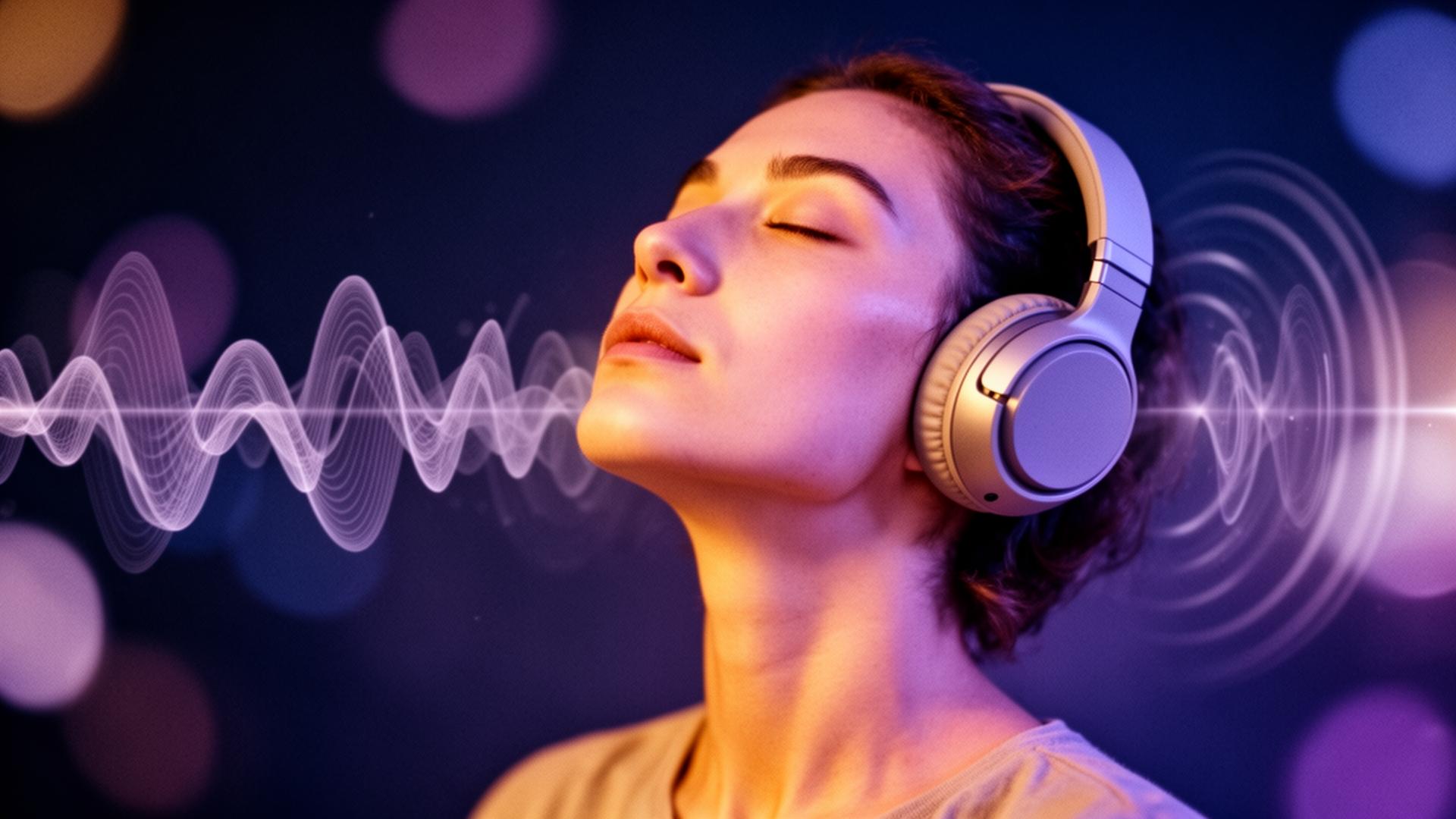
Listener with eyes closed wearing headphones, sound waves emanating outward
Peer-reviewed · 2021–2026

Music therapy isn't
an opinion. It's evidence.

A decade of clinical trials proves what therapists have always known: the right music, at the right dose, rivals — and sometimes outperforms — pharmaceuticals for anxiety, depression, and dementia.

The numbers

Four data points that should change clinical practice.

67%

Reduction in antipsychotic medication

in people living with dementia

UK Music · Power of Music Report (2022)

Beats

Music outperformed a benzodiazepine

for pre-operative anxiety reduction

Bringman et al. · Clinical Trial

59%

Of people say music improves

their mental health and wellbeing

UK Music · Power of Music Report (2022)

36min

Optimal listening dose

for the largest reduction in negative affect

Dose-Response Clinical Trial (2026)

What the research actually says

Three findings that move music from background to treatment.

Anxiety · 2026

The dose-response effect

All music conditions resulted in greater reductions in anxiety and negative affect compared to the control. The largest reduction was observed in the 36-minute condition — suggesting a true dose-response. Music listening was more effective at reducing preoperative anxiety than midazolam.

Investigating the dose-response relationship between music and anxiety reduction
Personalisation · 2026

Why mainstream music wins

Effective interventions are rarely one-size-fits-all. The ideal method and optimal outcomes depend on individualization — selecting and adapting musical content that aligns with a patient's personal history, preferences, and clinical needs.

Music therapy in health care practice — Frontiers (2026)

Public Health · 2022

Music as a public health tool

57% of people say music has helped them cope with lockdown. 59% said music has helped their mental health and wellbeing. Music therapy reduces the need for anti-psychotic medication in 67% of people living with dementia.

UK Music — The Power of Music Report (2022)

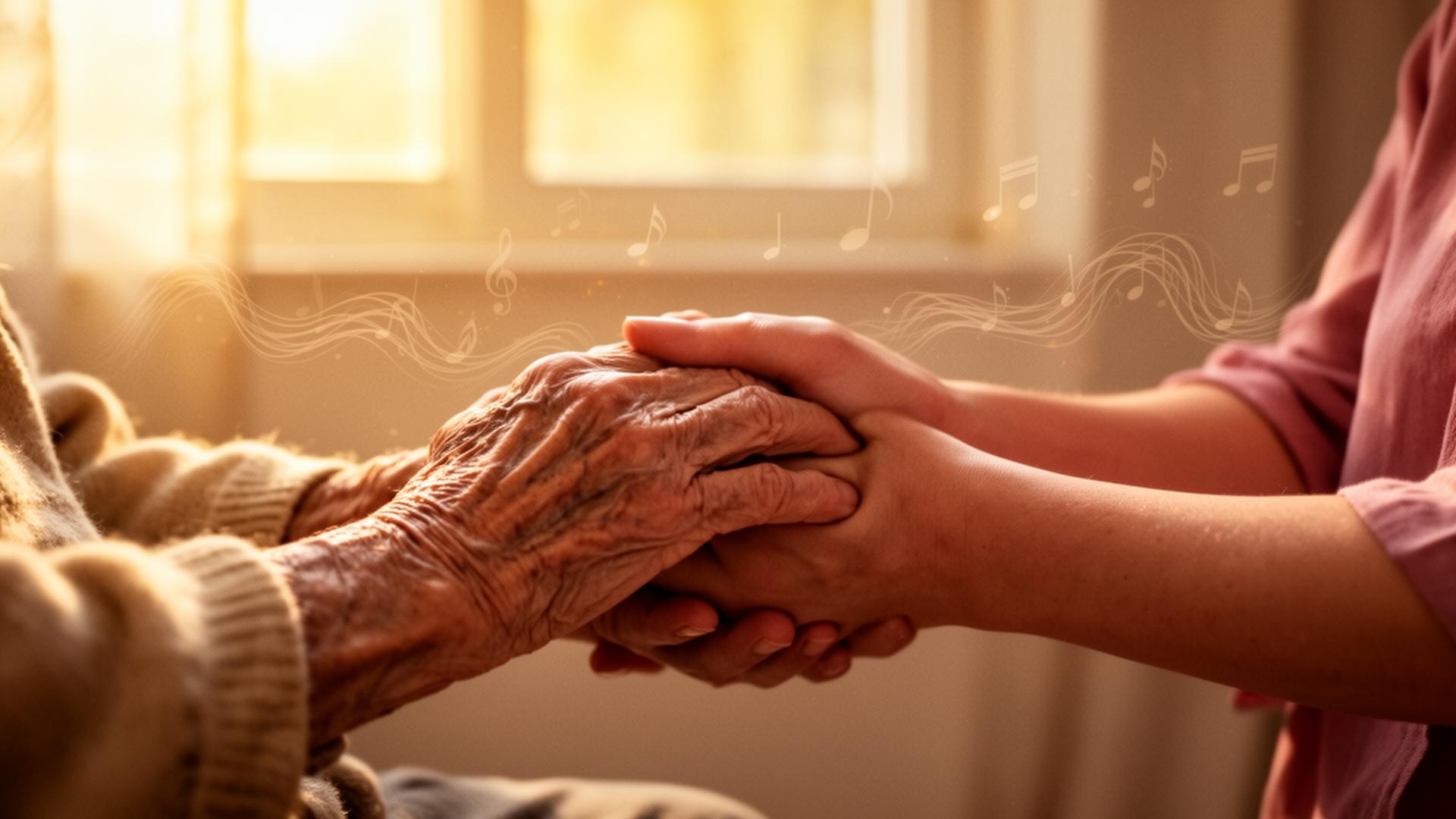
Younger hands holding an elderly person's hands as faint music notes drift in the warm window light
Behind every statistic

A song someone hadn't
heard in fifty years.

The data says 67% reduction in antipsychotic medication. The reality is a grandmother humming her wedding song. A veteran's shoulders dropping for the first time in months. A child with autism making eye contact through rhythm.

Music therapy is not abstract science — it's the science of being human, restored.

301M
people living with anxiety worldwide
2 weeks
longer than SSRIs take to work
The mechanism

How a song rewires the brain in real time.

Neuroplasticity — the brain's ability to forge new neural connections — is the substrate. Music is the catalyst. When a personally meaningful track plays, three biochemical cascades fire simultaneously.

In depression, mainstream music with autobiographical weight re-primes the reward pumps. In anxiety, rhythmic regularity entrains the autonomic nervous system back toward calm.

Abstract artistic brain made of luminous violet and gold sound waves rippling outward
Dopamine
Oxytocin
↓ Cortisol

Dopamine

The reward chemical

Released during favourite-song peaks. Re-primes the muted reward system common in depression.

Oxytocin

The connection chemical

Triggered by familiar, autobiographical music. Restores the felt sense of belonging.

↓ Cortisol

Stress regulation

Rhythmic entrainment regulates the autonomic nervous system, lowering heart rate and stress hormones.

Foundational principles

The three pillars every clinician should know.

Neuroplasticity & Rhythm

Rhythmic entrainment synchronises neural oscillations to external pulse, regulating heart rate variability and lowering cortisol — the body's primary stress hormone.

The Iso-Principle

Meet the patient where they are emotionally, then gradually shift the musical character toward the desired state. Honour first, then guide.

Music-Induced Analgesia

Listening engages descending pain pathways and releases endogenous opioids. Sound becomes a non-pharmacological adjunct to pain relief.

Peer-reviewed library

The papers behind the practice.

Filter by clinical condition. Each paper is downloadable for your case notes, supervision sessions, or grant applications.

0 papers
Loading library…

The evidence is in. The stream is on.

Every track on Music for the Mind is curated against this body of research — chosen for its clinical character, not just its catchiness.

Listen live now
Floating audio player